- Home
- LUMBAR
Lower back pain
Lower back pain, or lumbago in medical jargon, is providing an increasing and very significant financial strain on Western society. Surgery, high tech scans and staggering hospital fees are straining not only health care, but society in general to the very limits.
It is in this environment that manipulative care has thrived, but chiropractic help too has become very costly. Everyone is jumping on the bandwagon. What can you do to help yourself?
A general pessimism purveys society, the patient and insurance companies. The employer too is feeling the pinch as more workers take extended time off for the care of lower back pain.
In societies like the UK and the Defence Force in Australia, for example, where free health care is to be found, often it's about cost cutting and patient neglect.
There are no short cuts in the management of lower back pain.
Medicine and chiropractic help alike would acknowledge that chronic disc disease is clinically challenging, even to the most experienced doctor; whilst under care, the unexpected can radically change the outcome of treatment. One sneeze, a long journey considered unavoidable to the funeral of a beloved or even a stumble while taking a walk can all play havoc.
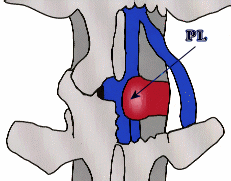
TWO TYPES OF SLIPPED DISC
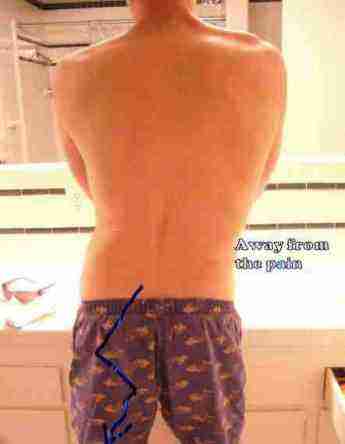
Notice the PL in the graphic above. The disc most commonly bulges in a Postero Lateral direction. This may be associated with the Sign of Pisa, a strange lean to the side, in the direction away from the pain.
However, the disc may also bulge in a postero medial direction. PM. Then you may find yourself leaning TOWARDS the painful side.
- Postero Medial disk herniation ...
- Another term often used is lumbar disc protrusion ...
Lower Back Pain
Lower back pain is the most common complaint heard in the chiropractic clinic often radiating down the leg.
- Slipped disk in the past?
- DEGENERATIVE LUMBAR DISC DISEASE CaseFile ...
- LUMBAR FACET ARTHROPATHY SPONDYLOLYSTHESIS ... lower back and leg pain with an unusual pain pattern.
Patients regularly complain of losing control of their physical bodies and the challenge for the clinician is to motivate the patient to become actively involved in the treatment of their condition; otherwise the cost of care can become horrific.
The economic burden of a disease is the sum of all costs associated with that condition which would not otherwise be incurred if it did not exist. It is not just the fee paid to the doctor; far from it.
Other common causes of low back pain are the
Chiropractic Help
Mrs S. consulted me yesterday at the chiropractic help coalface, suffering from lower back pain, and my secretary was soon cursing. I started running late. Why?
Mrs S. is an elderly lady. She could barely walk two months ago when she first consulted me, so bad was the pain in her groin and her lumbar region. Actually it was a sacro-iliac condition but never mind.
"Doctor, I have to stop treatment, I'm afraid."
"Oh, why?" That's me speaking.
"I just can't afford your fees any more."
"I can understand. You're not the first. But how are you doing?"
"Oh, I am so much better. I can walk again, and I can sleep on that hip now. I really want to thank you. I don't want to appear ungrateful, but this will be my last consultation."
The fact of the matter is that health care is expensive. And my fees are amongst the lowest in town. Mrs S and I came to a compromise. She is 1000% better, but I know if we completely stop treatment, it won't be too many months before she slowly slides back to where she was. As they say, old age is a bugger, and then you die; however, when you consider the alternative it is not so bad.
Will she will do her exercises faithfully? I think so. You can download them here at CHIROPRACTIC TIPS. I hope she will come every two months for a maintenance treatment. This is our standpoint at Chiropractic Help. The alternative is a greater likelihood of relapse.
Back to work
Numerous studies related to LBP suggest that the greatest savings from a society's perspective may be obtained by an early
return back to work, in order to minimise loss of productivity. This function-centred training versus drugs research makes interesting reading.
Further studies at Chiropractic Help point out that overall this is also to the patient’s benefit, and not only the employer and the health insurer.
Furthermore exercise, rehabilitation and fear avoidance training are all considered vital in achieving a good end result in the care of the patient suffering from lower back pain.
See our lower back core exercise programme lower down on this page; either rehab your condition or expect more trouble, often with the beginnings of pain down the leg; nowhere is it more true that prevention is better than a cure than in the care of the lumbar spine.
Lumbar Spondylosis casefile
Large "arthritic-looking" osteophytes (spurs) appear ugly on radiographs, but are usually asymptomatic and "an incidental finding." They have been there for years and certainly are not the cause of the acute pain that began last month; they are of no particular relevance. For the patient in pain, the rule is to look elsewhere for the source of lower back pain as in this lumbar spondylosis casefile.
Active rehabilitation is the only way that I know of to prevent or at least reduce the number of repeated episodes of lower back pain. Each one causes greater evidence of lumbar facet arthropathy.
Nevertheless, a review of chronic joint pain causes reminds us that prevention is better than a cure.
Lower back pain is strongly hereditary; if father had problems there is a 50% chance his children will be as bad or worse. If mother had difficulties the figure is 60 percent.
And if they both did, then it is 90 percent. This sacralization of L5 casefile illustrates the principle.
A stress fracture and wear and tear can contribute to a spondylolysthesis case file.
Here is a fuller explanation of what a spondylolysthesis is; there are two types, one usually caused by a childhood fall and the other by wear and tear in the older person.
Rehabilitation
Do you want to garden again? Accept the discipline of rehab, or suffer more episodes of severe lower back pain.
I have personally faced this in my own life; when doctors get sick themselves they often find there are important lessons to be learned. Having had very severe femoral nerve damage that nearly resulted in surgery, I wondered for a time whether I would ever lift beehives and dig a row of potatoes again.
Short leg research strongly recommends a thorough examination for the presence of a discrepancy which contributes strongly to a tilted pelvis, scoliosis and back pain.
Consequently the short leg and low back pain are closely correlated.
Saved by chiropractic from the knife, I went through rehabilitation with determination. For three months I was very careful and the tingling in the leg continued for nearly half a year, but now I am able to do everything that I did previously. Yesterday I built a hen house using heavy prefabricated sides and floor with no difficulty whatsoever.
I still do my lower back exercises very faithfully every morning before arising from bed.
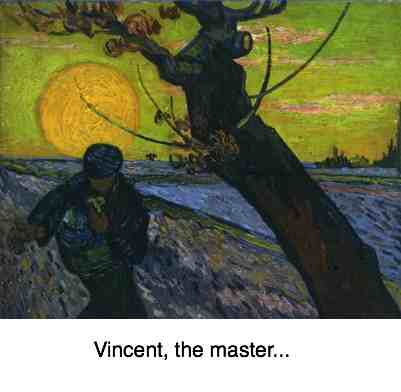
Vegetable gardening is one of my many passions. Having spent seven years practising in the Netherlands, who could not be stirred by the Impressionists? This oil painting, The Sower, by Vincent can be seen in the Van Gogh museum in Amsterdam. If you have six hours to blow during a stopover at Schiphol, make sure you get there.
Take the train into the city, and then it is an easy tram ride from the station. Check first whether you need a Schengen visa.
Stones in my clog
It was not only the art, but the Dutch people who made such an impression on me during those seven years. Here you can enjoy 25 odd anecdotes from the Chiropractic Coalface whilst I was in Holland, collected together in Stones in my Clog. Never will I forget the woman with very acute lower back pain who arrived, supported by a man I presumed was her husband. No, not Jan I, but her lover. Priest in my Bed is an absorbing tale.
To find links to the subjects in bold, copy and paste the title into the site search in the navigation bar above.
Prostate gland health
Prostate gland health and lower back pain unfortunately go hand in glove; it is the leading malignant male tumour and has a tendency to metastasize to the spine and pelvis.
The health of the prostate gland is measured via the PSA blood test and a rectal examination. Difficulty with passing urine must be followed up; it is often the first symptom of impending difficulties.
As always prevention is better than a cure. At prostate gland health you will find the simple nutritional changes that have a solid proven research basis. By following them, my own PSA is 0.9, quite remarkable my urologist tells me in a man of sixty-eight.
NORWAY
Low back pain patients gave an interesting insight in research done in Norway. Over 82% of patients with LBP are more than satisfied in the short term with chiropractic management.
However in the long
term, this percentage dropped indicating that more emphasis should be
placed by chiropractors into rehabilitation and continuing care to
prevent re-occurrence of lumbago; hence this site.
EXPECTING?
Lower
Back Pain and Leg Pain are often also associated with child bearing; are you expecting? There
are very many potential causes, with enormous economic consequences,
associated with lower back and leg pain during pregnancy.
Chiropractic Research is unequivocal. Manual treatment, spinal
stabilization and home exercises combined are of far greater and
longer-lasting benefit; better than any one of the three on their own.
Follow the links from Maigne's Syndrome CaseFile and you will get some core exercises that you can do at home to help with your lower back pain.
"Luckily fifteen minutes a day spent doing back exercises have taken away almost all of my pain.
But I have to do them every single day; there are no short cuts with my back pain."
- Hamilton Wende
Walking
A regular walk is probably one of the most significant things that
will improve a low back condition. Many sufferers find that a slow stroll,
like shopping, is hell, but going faster is far less tiring
and painful. This is because a leg length inequality causes a tilted pelvis and compensatory scoliosis.
Once over the acute phase of lower back pain, a regular walk can make a huge difference.
For more about how far and how
fast to walk, first take the KASCH PULSE RECOVERY TEST.
Of course, walking is also the most important prevention of osteoporosis.
Causes of osteoporosis tells of astonishing research that the elderly should not be taking calcium tablets; they end up in the lining of the coronary arteries, increasing heart disease.
Why all the emphasis on rehab?
A Swiss and Dutch research programme has shown that function-centred rehabilitation is more effective than pain medication in the treatment of lower back pain. It gets patients back to work much faster.
However in both programmes around 50% of the patients ended up after three years being permanently disabled.
In Chiropractic we combine the benefits of manipulation with function-centred training exercises to get you over lower lumbar back pain or sciatica and back on your feet as soon as possible.
This emphasis is to prevent chronic back pain; few things are more debilitating. An ounce of prevention is certainly worth a lot more than a pound of surgery.
Otherwise the next step is progression to upper leg pain.
A short limb very often has a profound influence on the lumbar spine, causing a scoliosis. This leg length inequality casefile demonstrates the point.
Diet and lower back pain
Diet has a profound effect on lower back pain, just as in all other parts of the body. A deficiency of antioxidants means inflammation of the lining of arteries, limiting blood flow to the heart and the lumbar spine too, for example.
Researchers have found that carotenoids are amongst the most important antioxidants in the diet; that is why enjoying a broad spectrum of coloured foods is so powerful in reducing disease and promoting well-being. There is no better place to start than these kale benefits.
After that the deep purple in beets has the double benefit of carotenoids and in prevention of constipation, a nightmare for those suffering from lower back pain.
Beetroot constipation tells more on the subject.
Lower back surgery
Chiropractors are not in principle against lower back surgery, in the right circumstances; unremitting LEG PAIN that has not responded to conservative care, rather than spinal pain. However the results are so unpredictable especially in smokers, the obese and diabetics.
Did you know that Medicine's own
research reveals that less than 50% of lumbar fusions have a
satisfactory outcome? This is even more true if you have no personal medical insurance; the rookie has to learn somewhere, but rather not on your back.
- Go from LOWER BACK PAIN to LOWER BACK SURGERY ...
- BACK SURGERY ALTERNATIVES ...
- Femoral nerve damage - my own escape from the knife.
A healthy diet with salads like this recipe for tabouli tabbouleh is obviously essential for a good outcome; stopping or at least reducing smoking for a period is vital, otherwise you will become a victim of what is known as failed back surgery.
Smoking is a major cause of failed back chiropractic too.
Maigne's syndrome
A not-uncommon, and less well understood cause of lower back pain is the Maigne's Syndrome; then there will be referral down the superior cluneal nerves.
Here are some Maigne's syndrome exercises.
As you can see lower back pain is a very complex subject; do not be surprised if your chiropractor is soon running late.
Here is more from a Maigne's syndrome case file.
LINKS TO OTHER INTERESTING SITES
- Lower back and leg pain .... sciatica.
- Spinal stenosis exercise
- Degenerative lumbar disc disease case file
- Lower Back Pain Symptoms
Have A Question about your lower back?
I receive many questions about Chiropractic. It might be help with a spinal condition, but it might also be from a person who can't walk after a hip operation, or some such thing.
I will do that by answering your questions personally, but it will be converted to a Web Page so others can benefit from your questions. Omit your name if you like.
However, do understand that, in the main, I'm going to be directing you, should it be pertinent, to a Chiropractor in your neck of the woods. I'll respond to all reasonable inquiries, but please be specific, and give as much detail as you can.
Do understand that lower back pain is extremely complex, so I can only give general guidelines. There's no substitute for a careful thorough chiropractic examination.
What Other Visitors Have Said
Click below to see contributions from other visitors.
If you find my answer useful, please ask friends to grade it.
Arachnoiditis after epidurals and facet joint injections 
Had 2 epidurals 4 years ago for low back pain. Had MRI which showed spondylolisthesis, (stage 1) mild scoliosis, spurs, arthritis. Saw Neurosurgeon, said …
How to convince my Chiropractor to check leg length?
How to convince my Chiropractor to check leg length? Frankly there's none so blind as those who will not see.
I have been to many DCs over the years. …
like an electric shock in lower back
Hi Doc.
I had the strangest experience while sitting back on my zero gravity chair, just lying back still and suddenly felt something like an electric …
Lower back exercises after surgery
Doctor, we have communicated many times via this site. You have always given me sage advice. Unfortunately I have not been able to avoid the knife. …
Diagnosed with cluneal nerve damage and pain down the front of the thigh Not rated yet
Home > Lumbar > Diagnosed with cluneal nerve damage and pain down the front of the thigh
I had three injections so far for …
Low Back Pain from old Ankle Injury? Not rated yet
Hi, I have just come across this article and I have noticed that you describe pretty much all of my pain symptoms that I have had now for at least 7 years. …
Lower back pain after a broken ankle Not rated yet
I broke a bone by my ankle 2 months ago and am still not walking normally. My lower back is hurting too. What can I do to alleviate the back pain.
…
Pain in lower back after a crunch sound Not rated yet
Home > Lumbar > Pain in lower back after a crunch sound
Hi,I'm a 40-year old female. During leg kick-back exercises, I heard …
Lumbar lordosis and spondylolysis Not rated yet
Home > Lumbar > Lumbar lordosis and spondylolysis
Had a lower back problem L5 L4 last March and was advised surgery but recovered …
numbness in right foot Not rated yet
Numbness in right foot is a common malady.
I have numbness along the outside edge and bottom of my right foot; it will be 4 years in January.
I do …
Non stop thigh muscle twitching Not rated yet
Home > Lumbar > Non stop thigh muscle twitching
I have non stop muscle twitching in my right thigh. It started 2 weeks ago …
Lumbar back pain Not rated yet
Hy there, I am a physiotherapist with a lumbar pain.
You can call me PF.
I have a lumbar pain, at the right paravertebral zone at L4-L5 or L5-S1 …
When browsing these links use right click and "Open Link in New Tab", or you may get a bad gateway signal.
- Home
- LUMBAR
Did you find this page useful? Then perhaps forward it to a suffering friend. Better still, Tweet or Face Book it.
MONTHLY NEWSLETTER. Signed up yet? It is free.
BACK ISSUES
Chiropractic Help Backissues ... our monthly newsletter, click here for all the old issues.
- Issue #53: No short cuts to better health / Simple balance and quad strengthening exercises
- Issue #52: Needs an adjustment / Everything must change
- Issue #51: Elective surgery in the elderly / Cooling and reheating starches
- Issue #50: Make time for breakfast / Scrambled eggs and parsley
- Issue #49: Consulting a locum / Green salad /Eggs Florentine
- Issue #48: Hips and the sacroiliac joints/ Bacon and eggs
- Issue #47: Life without medication/ Eight coloured foods
- Issue #46: Lower backs and ankles/ kaempferol and cancer prevention
- Issue #45: Tingling, weakness and malaise/ vitamin B1
- Issue #44: Applying general chiropractic principles to the hand / Omega-3
- Issue #43: Art and science of chiropractic / Kale
- Issue #42: Tum sleeping / Flaxseed
- Issue #41: Adult potty training / Beetroot constipation
- Issue #40: Ominous lumbar signs / Too much medication?
- Issue #39: Swapping chiropractors / Butter is back
- Issue #38: Making a correct diagnosis / Make your own pesto in five minutes.
- Issue #37: Have your wisdom teeth out in the chair
- Issue #06: Safety on the Stairs / Ginger
- Issue #05: Safety in the home / Red foods
- Issue #04: Whiplash and the Joints of Luschka / Parsley
- Issue #03: How to stop falling / Danger of a low fat diet
- Issue #01: Tingling in the arms and hands / Apples
(PS. If you find them irrelevant to your needs or an exercise in tedium, one click will UNsubscribe you.)
- Home
- LUMBAR
