- Home
- NECK
Neck pain
Neck pain can be far more severe than even a very sore back.
How common is pain in the neck? "Epidemiology"
- Most people can expect to experience some pain in the
neck in their lifetimes, although for the majority, it will not
seriously interfere with normal activities.
- During any 12 month it was found in up to 70% of the general population, and up to 48pc in workers.
However, pain in the neck with associated disability was less
common: 12 month prevalence ranged up to 11.5 percent in the general
population.
- Each year, between 11 and 14.1 percent of workers reported
being limited in their activities because of pain in the neck. It was
common in all occupational categories, and the results of the Ontario
study suggest that worker's compensation data significantly
underestimate the burden of discopmfort in workers.
- The number of persons seeking health care in
emergency rooms for traffic related Whiplash Associated Disorders
has been increasing over the past 3 decades. What are the
symptoms? See lower down.
Neck pain
Neck pain is experienced by about 50 percent of the population in any year; a new study reveals much about treatment and prevention.
Risk factors
- There is NO EVIDENCE that common degenerative changes (arthritis) in the cervical spine are a risk factor for pain in the neck.
- Smoking and exposure to environmental tobacco is a
risk factor. The spine like every organ requires oxygen and any
decreased supply in the blood impacts negatively on joint healing.
- High quantitative job demands,
low social support at work and sedentary office position all increase the risk of neck pain; repetitive and precision tasks too.
- Habitual self manipulation of joints without the proper distraction damages the hyaline cartilage lining the joints.
- Devices aimed at limiting head extension during
rear-end collisions were found to have a preventive effect. For more
interesting facts about whiplash,
click here.
- Whiplash research.
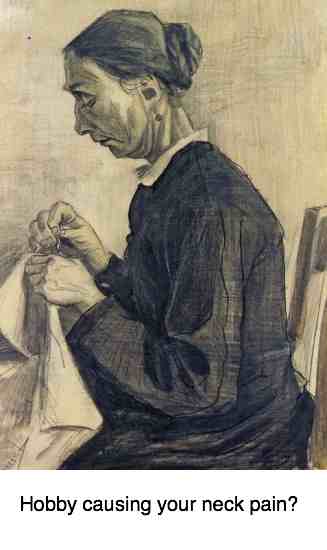
Hobbies (Ps Know the artist? See if you see the "Vincent" in one of the seams.) - Those who sleep on their stomachs and those who deliberately click their own necks have a higher incidence of neck pain.
Do you have a problem that is not getting better?
Are you looking for a different slant on your pain?
Do you want to pose a question?
Course and prognosis
Most people do not experience a complete resolution of symptoms. Between 50 and 85% of those who experience pain at some initial point will report having it again 1 to 5 years later. These numbers appear to be similar in the general population, in workers and after motor vehicle crashes.
The prognosis also appears to be multifactorial. Younger age was associated with a better prognosis, whereas poor health and prior episodes of pain in the neck were associated with a poorer prognosis.
Poorer prognosis was also associated with poor psychological
health, worrying, and becoming angry or frustrated in response to pain
in the neck. Greater optimism, a coping style that involved
self assurance, and having less need to socialize, were all associated
with better prognosis.
Specific workplace or physical job demands were not linked with recovery from neck pain. Workers who engaged in general exercise and sporting activities were more likely to experience improvement in their symptoms.
Post injury psychological distress and passive types of coping were prognostic of poorer recovery in whiplash associated disorders.
There is evidence that compensation and legal factors are also prognostic for poorer recovery from whiplash.
What is the place of x-rays, scans and electrophysiology in the management of uncomplicated neck pain? What about blood tests and other medical procedures?
And does the presence of radiating pain to the arms and hands mandate extra views showing the uncovertebral joints or imaging?
The assessment for fracture in the emergency room and the diagnosis
of cervical pain with radiculopathy are of value, but there is little
evidence that these procedures for cervical pain without severe
trauma or radicular symptoms have validity and utility.
Computerized tomography scan has better validity and utility in cervical trauma for high risk or multi-injured patients.
The clinical physical examination is more
predictive at excluding a structural lesion or neurologic compression
than at diagnosing any specific etiologic condition in patients with
cervical pain.
Conventional x-rays, as with other forms of
arthritis, are considered insensitive in patients with the early
osteoarthritis that follows whiplash as surely as night follows day.
All other assessment tools such as
electrophysiology, discography and blood test lack validity and utility.
Reliable and valid self assessment
questionnaires given to neck pain patients can provide useful
information for management and prognosis.
The finding of degenerative changes on imaging has not been shown to be associated with pain in the neck.
How bad is the pain?
Slipped disc Arm Pain
Probably the most difficult and painful condition treated in Chiropractic clinics is a slipped disc in the neck, with radiating pain down the arm.
Often the deep inescapable ache in the arm is even worse than the neck pain, and it's often bad at night.
A bulge of the disc, impinging on the nerve root is a great challenge to all clinicians, not only chiropractors. Pain from the neck that radiates down the arm needs to be assessed and treated immediately. Left to its own devices this can be a very nasty condition, and allowed to become chronic is to be avoided under all circumstances.
Tingling in arms and hands
Tingling in arms and hands is one of the most common questions asked at chiropractic help; it's really just the referral of neck pain to the limbs.
Many of the arm pain syndromes have their basis in the neck.
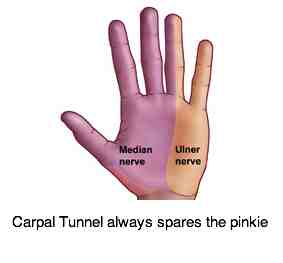
So too those like carpal tunnel syndrome that cause tingling in arms and hands.
Remember, CTS never causes symptoms in the little finger.
A pinched nerve in the neck may be caused by poor posture when using the telephone.
Chiropractic help
Prior to treatment for any condition there should always be a diagnosis. And that means it always begins with a thorough History and Examination before the treatment of neck pain.
Treatment, should subluxations be found, is based on getting any fixated joints into motion again, to restore the normal movement of intracapsular fluids that bathe the joint cartilage; thus reducing the risk of inflammation of joints starved of nutrients and oxygen.
That adjustment should be highly specific. Crude manipulation of the spine causing multiple releases at many levels is dangerous and totally unnecessary.
Needless to say, cervical spine manipulation should only be done by a highly trained and skilled clinician. There are dangers associated with the procedure, as in any treatment. Iatrogenic illness is not specific to medication, surgery and hospital acquired infection; would you let a chiropractor take out your appendix?
Highlighting this is the fact that there are plans afoot in the Netherlands to completely ban all cervical adjustments after three strokes following manipulation by other professionals who have been to a few weekend courses on physical therapy.
The training of chiropractors in the art and science of manipulation is long, arduous and painstakingly thorough. Even so, one in six million manipulations causes a stroke; that's very rare.
The thorough examination also enables the clinician to decide which levels to adjust, and how.
Medical treatment of cervical pain is based on the use of anti-inflammatory and muscle relaxing drugs.
Suppression of inflammation following whiplash is felt to be important in slowing the inevitable structural disease progression.
It is widely acknowledged that getting the patient back to work as soon as possible is very important.
Should this relatively conservative treatment fail; medical research admits that anti-inflammatory drugs in fact cause many thousands of deaths in the United States, mostly from bleeding ulcers; in their opinion more radical nerve root injection, neurotomy and open surgery should be used.
- Anti-inflammatory drugs ...
- Stiff neck and high temperature? A medical emergency. MENINGITIS ...
- Complications of surgery ...
New research
- "Alternative" care for cervical pain, research concludes, appeared
to be more beneficial than surgical or best usual medical care.
- Educational videos, mobilization, manipulation,
exercises, low-level laser therapy, and perhaps acupuncture appeared to
have treatment benefit for pain in the neck.
- For both whiplash associated disorders and other
cervical pain without radicular symptoms, interventions that focused on
REGAINING FUNCTION and RETURNING TO WORK as soon as possible were
relatively more effective than interventions that did not have such a
focus.
- There is NO EVIDENCE that epidural or selective
root injections with corticosteroids decrease the rate of open surgery
for neck pain.There is evidence for SHORT TERM symptomatic improvement
of radicular symptoms with these treatments.
- Evidence is lacking to support intra-articular steroid injections or radiofrequency neurotomy for cervical pain.
- There is no clear evidence that LONG-TERM
OUTCOMES are improved with the SURGICAL TREATMENT of cervical
radiculopathy compared with non-operative measures.
- However, relatively rapid and substantial relief of pain and impairment in the SHORT TERM (less than 3 months after an operation) after surgical treatment appears to have been reliably achieved.
Neck pain anatomy
In Chiropractic we try to encourage patients to understand their pain and disability. Participating in your own disease means you will be far more able to get on top of it, and cope with it.
It is important that we do our utmost to make sure the pain does not continue passed the critical 6 months point. Thereafter, research indicates it is likely to remain a life-long problem.
Repeated self manipulation of the cervical spine injures the sensitive UncoVertebral joint Luschka that protects the nerve root. So does whiplash and in particular an impact from the side.
So what are the symptoms of whiplash?
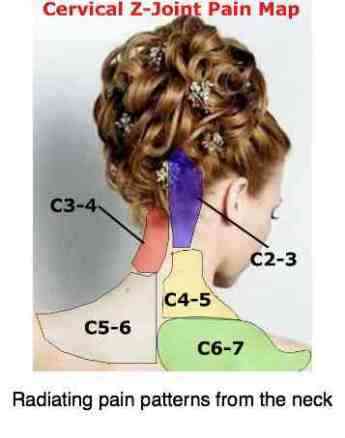
Shoulder pain often originates in the lower neck.
For more information about click here. NECK PAIN ANATOMY
Stroke
- There is an association between chiropractic and medical services
and subsequent vertebrobasilar artery stroke in persons under 45.
- A similar association was also observed among patients receiving general practitioner services.
- This is likely explained by that patients with a
vertebrobasilar artery dissection-related in progress, with the
associated neck pain or headache, seek care from either their doctor or
chiropractor before having their stroke. Neither their doctor's or
chiropractor's care is considered the cause of any ensuing stroke.
- For more information about the risks of stroke, click here:.
- Stroke chiropractic ...
For a stunning interview with a neurologist who herself had a stroke and, afterwards was able to describe in the most amazing way what was happening, follow this link.
Scroll down to My STROKE of insight at Neck pain and Headache.
Classification and prevention of neck pain
Grade one cervical pain
There are no signs or symptoms suggestive of
major structural pathology and only minimal interference with daily life. The patient will most likely respond to minimal intervention such as
reassurance and pain control. In depth investigations and prolonged treatment are not indicated.
Grade two cervical pain
Again there are no signs or symptoms of
major structural pathology but significant interference with the activities of
daily living now begin. The patient requires pain relief and early treatment
aimed at preventing long term disability.
Grade three cervical pain
There are once more no signs or symptoms of
major structural pathology but the presence of neurological signs such as
decreased deep tendon reflexes, weakness and sensory deficits are found on examination. The patient may
require further investigation and occasionally more invasive treatments.
Grade four neck pain
There are signs or symptoms of major
structural pathology such as fracture, myelopathy or
systemic disease; or a neoplasm. It demands prompt investigation and treatment.
Prevention
Prevention is best directed at reducing the occurrence of major injuries and dealing effectively with whiplash to avoid the development of disabling spinal pain. For example, wearing of seat belts has been proven to have major benefits in cases of motor vehicle accidents. Keeping to the speed limit and taking regular breaks on long trips are equally important.
Avoiding inflammatory foods typical of the modern "industrial diet" should not be underestimated; and the inclusion for example of those rich in the omega-3 oils. Cold-water fish, walnuts and flaxseed come immediately to mind.
Seeking treatment for so called minor neck pain before the onset of
radiating symptoms like tingling, numbness and weakness in the shoulder, elbow and hand is important; the ache in the arm can be very severe.
Managing headaches with minimal analgesics to prevent kidney failure makes sense.
Think of good posture but even that is often not enough. This teacher required an axis adjustment yesterday but this book stand has reduced her need for chiropractic treatment by more than fifty percent. An old neck injury has left its mark.
Think too about your bedside lights; do you have to crane your neck to get adequate illumination? There's a simple solution, costing little more than one chiropractic treatment. Prevention is the name of the game.

Cervical facet syndrome
Cervical facet syndrome is probably the most common cause of neck pain.
There are five joints between the vertebrae in the neck. The most common spoke in the wheel is the facet joint, two on each side.
Read more at lower cervical facet anatomy if you want more material on the subject.
Whilst care of the neck can never be described as simple, the cervical facet adjustment is a procedure done many times every day by all chiropractors.
Fixations in the facet joints cause local pain, sometimes radiation down to the shoulder, arm and midback; and often headaches.
The sudden onset of an extremely painful neck, with very limited motion, often on awakening in the morning, is known as wry-neck or torticollis. Reducing the displaced meniscus requires great care since the patient is in such agony but correctly done brings almost instant relief.
Read more at torticollis physical therapy.
Pronator teres syndrome
Pronator teres syndrome is a repetitive strain injury in the forearm; there's lots of research that the many arm pain conditions can refer back to the cervical spine causing neck symptoms. There's plenty of the proverbial chicken and egg here.
The net result is severe pain radiating down the lower arm to fingers, always excluding the pinkie; it follows the median nerve distribution, same as carpal tunnel syndrome.
Horse riding
Unregulated, poorly managed horse riding often leads to a lifetime of misery; and very expensive treatment. Would you put your untrained child on a superbike?
How reliable are x-rays? Should one take radiographs every time a child falls off a horse?
Injuries in childhood to the cervical spine are one of the causes of advanced degenerative changes in the neck in the elderly, leading to the diffuse and oft serious symptoms of cervical stenosis.
Poorly managed trauma to the neck always runs the risk of becoming a cervical stenosis case file.
Bone and joint decade
- The applied minds of many different disciplines, including chiropractic has made great strides in the management of neck pain; a more academic page.
- Cervical radiculopathy @ Cleveland Clinic
When browsing these links use right click and "Open Link in New Tab", or you may get a bad gateway signal.
Important considerations @ Neck Pain
- Simple Stiff Neck exercises
- Cervical facet syndrome
- Colic chiropractic - the mid cervical nerve roots are the source of the phrenic nerve that serves the diaphragm, much involved in the unhappy infant.
- Home
- NECK
Did you find this page useful? Then perhaps forward it to a suffering friend. Better still, Tweet or Face Book it.
MONTHLY NEWSLETTER. Signed up yet? It is free.
BACK ISSUES
Chiropractic Help Backissues ... our monthly newsletter, click here for all the old issues.
- Issue #53: No short cuts to better health / Simple balance and quad strengthening exercises
- Issue #52: Needs an adjustment / Everything must change
- Issue #51: Elective surgery in the elderly / Cooling and reheating starches
- Issue #50: Make time for breakfast / Scrambled eggs and parsley
- Issue #49: Consulting a locum / Green salad /Eggs Florentine
- Issue #48: Hips and the sacroiliac joints/ Bacon and eggs
- Issue #47: Life without medication/ Eight coloured foods
- Issue #46: Lower backs and ankles/ kaempferol and cancer prevention
- Issue #45: Tingling, weakness and malaise/ vitamin B1
- Issue #44: Applying general chiropractic principles to the hand / Omega-3
- Issue #43: Art and science of chiropractic / Kale
- Issue #42: Tum sleeping / Flaxseed
- Issue #41: Adult potty training / Beetroot constipation
- Issue #40: Ominous lumbar signs / Too much medication?
- Issue #39: Swapping chiropractors / Butter is back
- Issue #38: Making a correct diagnosis / Make your own pesto in five minutes.
- Issue #37: Have your wisdom teeth out in the chair
- Issue #06: Safety on the Stairs / Ginger
- Issue #05: Safety in the home / Red foods
- Issue #04: Whiplash and the Joints of Luschka / Parsley
- Issue #03: How to stop falling / Danger of a low fat diet
- Issue #01: Tingling in the arms and hands / Apples
(PS. If you find them irrelevant to your needs or an exercise in tedium, one click will UNsubscribe you.)
- Home
- NECK
