Low back pain
Low back pain sets society back vast amounts of money; how is this cost of sickness made up?
Cost of sickness

It could cost you all your savings too unless you have personal medical insurance; if not, make sure you are spending time every day on prevention. That means in part a basic set of low back exercises done faithfully every single morning before arising from bed; it's the same philosophy as brushing your teeth.Or the cost of sickness may become your nightmare too should you suffer an acute attack of low back pain.
An ounce of prevention is worth a lot more than a pound of cure; it could save your very life; two to three patients per thousand die within thirty days of lower back pain surgery[1].
Lumbar spine conditions, it is freely admitted, is imposing a real, rapidly increasing and substantial economic burden on society, despite the technological advances in recent years; and perhaps because of that so called progress.
A general pessimism prevails, owing to the disabling nature of chronic lumbar disorders, the economic cost to society, and the great expense to the patient, the insurer, and the loss of productivity in the place of work.
Last night I attended a lecture by an esteemed neurosurgeon. I came away with only one impression; chronic low back pain is just as challenging to the man with the knife as it is to the chiropractor.
Only in the presence of cauda equina signs, the inability to urinate, did he feel that there was urgency for a referral. Foot drops do not always recover after the procedure, and the humble man admitted that surgery can cause a paresis in the leg. Technically the operation is difficult, and just one slip can and does injure the nerve root.
This page was last updated by Dr Barrie Lewis on 12th May, 2020.
Low Back Pain
Smoking is the cause of 50 percent of fusion failures, he said. That rings a bell with chiropractic too. The smoker with low back pain is far more difficult to manage. The tissues just don't get enough oxygen to heal properly.
So, we would both acknowledge that the treatment of back pain is clinically challenging, even to the most experienced doctor;
whilst under care a bout of coughing, a prolonged sit, an awkward turn, the unexpected can radically change the course the condition is taking. Yesterday in my practice it was a patient just over a severe episode of low back pain who lifted and moved a bed "because it was too hard". Now he's back at square one. Worse in fact. Sometimes massaging bed rest is the only way.
The economic burden of a sickness
It's defined as the total of all expenses associated with a
condition which would not otherwise be billed if that condition in fact did not
exist. And that amounts to far more than just the chiropractor or surgeon's fees. If you have no personal medical insurance, take a good look what follows; it's mind boggling.
OPPORTUNISTIC COST
Economic costs related to low back pain are extremely difficult to measure. For example, the so called OPPORTUNITY cost is that value which corresponds best to another and perhaps better use of that money;
Would for example the economic saving by avoiding expensive surgery, scans and hospitalisation and using more conservative means actually provide in the long term a lower sum of the total expenses?
Would the savings associated with sending a patient with low back pain back to the work place too soon, with the attendant risk of a relapse, be greater or less than the acknowledged increasing risk of allowing the patient to remain too long away from work?
Is your work hard and physical? Then obviously return to the work place must be done with care and guidance.
On the other hand, sitting is often reckoned to be the greatest enemy of the low back.
ECONOMIC BURDEN
What then is this total cost of lower lumbar back pain — the economic burden? Economists point to three components:
(1) DIRECT COSTS
Lower lumbar back pain direct costs would include the services of medical doctors and complementary practitioners such as chiropractors, medication, hospitals, scans etc. These are relatively easy to estimate, but it would also include the cost of travel to the doctor and even renovations to the patient's home to make it more accessible to a person disabled by chronic LBP.
Economic surveys of ten countries found that 65% of direct costs went to medical care, excluding imaging, whereas only 5% was allocated to Chiropractic Help care in the treatment of LBP.
(2) INDIRECT COSTS
Lower lumbar back pain causes loss of productivity due to sick leave,
‘absenteeism’ and the decreased 'presence' of the patient; the so called ‘presenteeism’ is
staggeringly large; the patient is in fact present at work but ineffectual. These indirect costs may be even greater than the direct costs.
This is where chiropractic really comes into its own; numerous Workman’s Compensation studies conclude that chiropractors get their patients back on the job sooner.
- Lost
earnings,
- early retirement and the
- inability of an employers to replace an essential worker – the so called friction cost - are included in the indirect costs.
- Help hired in the home to do vacuuming, say, and to do routine maintenance tasks such as cleaning gutters and mowing the lawn, which could not done due to low back pain.
Lost productivity costs due to low back pain was estimated at seventeen billion dollars in a 2006 US economics study. (Spine 31)
(3) INTANGIBLE COSTS
The economic costs should also include the value of decreased fulfilment from life because of illness. However, these intangible costs are rarely included
when estimating the economic burden of an illness; how does one place a monetary value on the enjoyment of life? Regularly at Chiropractic Help I get letters from people whose lives have been completely dominated and ruined by low back pain. But how do you estimate this "intangible cost?"
Personal medical insurance
To be insured, or not to be insured, that is the question. Personal medical insurance is, obviously, a very personal decision. For your peace of mind, do you NEED full insurance? Just a hospital plan? If you suffer regularly from low back pain, or any other chronic illness, then it's obviously best to be covered.
Do you have the discipline to deposit your premium on a debit order into your own "medical" account, instead of into that "insurance company account?"
Are you comfortable having "NO INSURANCE"? If you can get through the first three years without a disaster, and have the discipline not to plunder than "medical account" then, provided you follow the basic laws of good health, you're into a big win to nothing.
Smoker? Obese? Couch potato? Dislike apples and fruit? Won't eat your mandantory five colours a day? You need full insurance. Don't even start to think about a personal medical insurance.
What are the back surgery alternatives?
ATHEROSCLEROSIS SYMPTOMS Low Back Pain
SMOKING and CHOLESTEROL.
Every chiropractor knows it, and it's the most important factor in failed back surgery, that the patient who smokes and/or has seriously raised serum cholesterol is much more difficult to manage.
Why is that? Chiropractic Help will help you grasp it: Smokers have far more back pain too ...
BACK TO WORK
Numerous studies related to LBP suggest that the greatest economic cost savings from society's perspective may be obtained by early return to work and minimizing lost productivity.
Further studies point that overall this is also to the patient’s benefit, and not only the employer and the health insurer.
Furthermore, exercise, rehabilitation and fear avoidance training are all considered vital in achieving a good end result in the care of the patient suffering from lower lumbar back pain.
Alternative care for low back pain saves insurance companies huge amounts.
A 2005 study reported in the journal Spine of 190,000 patients suffering from lower lumbar back pain clearly showed that inclusion of Chiropractic Help resulted in significant economic savings for two insurance companies;
- $342 per patient for those consulting mainly chiropractors –vs-
- $506 for those consulting mainly medical doctors, and this excluded lumbar spinal surgery and hospital costs.
* Spine is one of the most respected medical journals.
LOWER BACK EXERCISES
Done faithfully every morning before getting out of bed, less than one minute, these basic lower back exercises will make a profound difference to the health of your lumbar spine and sacroiliac joints. LOWER BACK EXERCISES ...watch a short YouTube video.
Chiropractic Help
On a personal note...
I have over the years, like most people, had recurrent episodes of low back pain. It's the result in part of a short leg and the sort of injuries that every one has. A ladder sliding to the side, lifting a heavy roll of wire for launching my glider, thirty years of playing squash at a fairly high level, and lifting beehives have all taken their toll.
What's interesting is that five months ago I went into semi retirement. At 62 definitely over the hill; and started spending a large amount of time doing heavy gardening. Within weeks I had an acute episode of low back pain that my daughter, Dr Jane Ackerman DC, had to sort out; very competently, if I say it myself. But since then my whole back has got stronger and stronger. Not a twinge in the last months except when sitting at this damn computer.
The enemy of the back is the chair. The friend? Physical activity. For me that's meant making my own compost heap and growing green beans, and cooking them too, and the like. That's meant stalking my garden, paintball gun in hand, watching for Stealth, the monkey who has a liking for my sweetcorn and butternut squash. To date it's Stealth 10 to Bernard Preston 0; he just cleaned us out but just you wait, Stealth, just you wait. I'm ready for you, and just as determined and patient as you are to raid and decimate our garden.
My point? The back thrives on exercise. The deckchair and
car seat is its downfall. Couch potato? You'll pay for it in more ways
than one. Low back pain is a costly affair. Especially when the leg pain starts...
Leg length inequality
A short leg - how short is short remains controversial - contributes greatly to the direct costs of health care. It increases back pain and neck pain, is one of the significant causes of Maignes syndrome (upper lumbar pain radiating to the buttock and groin), but also to hip arthritis and knee arthritis symptoms ...
A simple shoe insert, inexpensive, can make an enormous difference, but deciding whether it should go in the shoe, just under the heel, the whole inner, how thick, under the shoe, whether pronation should be corrected, is problematic. Leg length inequality ...
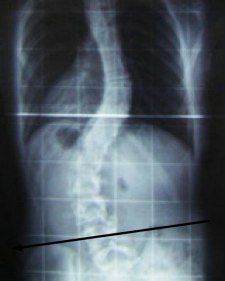
Note the very unlevel pelvis. A short leg can be hereditary, but also caused by trauma to the leg, or even a flat foot.
Useful Links to prevent Lumbar Surgery
- SLIPPED DISK ...
- Spondylolysthesis ... no, not a jawbreaker, but a forward slippage of the vertebra.
- Upper leg pain with associated LBP
- Lower back and leg pain ...
- Chiropractic Help for Lower back and leg pain during pregnancy.
Did you find this page useful? Then perhaps forward it to a suffering friend. Better still, Tweet or Face Book it.
MONTHLY NEWSLETTER. Signed up yet? It is free.
BACK ISSUES
Chiropractic Help Backissues ... our monthly newsletter, click here for all the old issues.
- Issue #53: No short cuts to better health / Simple balance and quad strengthening exercises
- Issue #52: Needs an adjustment / Everything must change
- Issue #51: Elective surgery in the elderly / Cooling and reheating starches
- Issue #50: Make time for breakfast / Scrambled eggs and parsley
- Issue #49: Consulting a locum / Green salad /Eggs Florentine
- Issue #48: Hips and the sacroiliac joints/ Bacon and eggs
- Issue #47: Life without medication/ Eight coloured foods
- Issue #46: Lower backs and ankles/ kaempferol and cancer prevention
- Issue #45: Tingling, weakness and malaise/ vitamin B1
- Issue #44: Applying general chiropractic principles to the hand / Omega-3
- Issue #43: Art and science of chiropractic / Kale
- Issue #42: Tum sleeping / Flaxseed
- Issue #41: Adult potty training / Beetroot constipation
- Issue #40: Ominous lumbar signs / Too much medication?
- Issue #39: Swapping chiropractors / Butter is back
- Issue #38: Making a correct diagnosis / Make your own pesto in five minutes.
- Issue #37: Have your wisdom teeth out in the chair
- Issue #06: Safety on the Stairs / Ginger
- Issue #05: Safety in the home / Red foods
- Issue #04: Whiplash and the Joints of Luschka / Parsley
- Issue #03: How to stop falling / Danger of a low fat diet
- Issue #01: Tingling in the arms and hands / Apples
(PS. If you find them irrelevant to your needs or an exercise in tedium, one click will UNsubscribe you.)
