Home
What's new
WHY?
Chiropractic Tips
Dr Lewis DC
Barendrecht
Dordrecht
Pain Syndromes
Medical Conditions
Healthy Living
Olive Garden
Arthritis
Is Chiro safe?
Subluxation
Teddybears' Picnic
Chiro Coalface
Tingling
Dizziness
Anatomy
Inspirational Books
NSAIDs
Whiplash
HEAD NECK
TMJ
ARM
MID-BACK
LUMBAR
PELVIS
UPPER LEG
ANKLE
FOOT
Good Reads
Contact

XML RSS
Add to My Yahoo!
Add to My MSN
Add to Google

INTERMITTENT CLAUDICATION

SOMETHINGS PREDICTABLE, SOMETHING SURPRISING

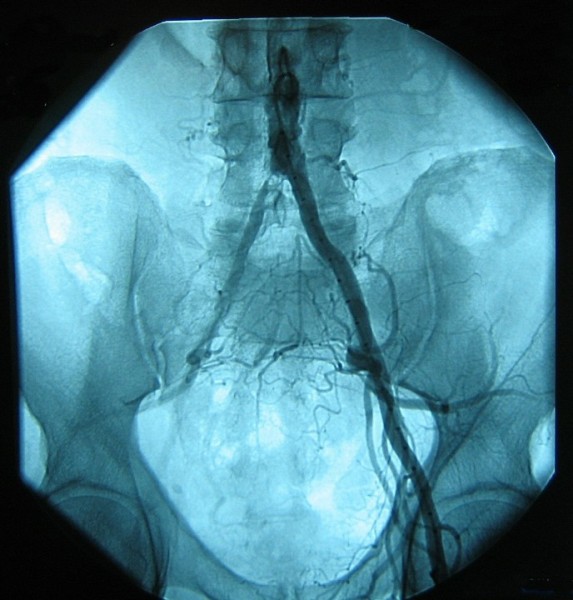
Intermittent claudication is one cause of leg pain, and should be considered in every patient who complains of pain in the leg associated with exercise, and has a negative Straight Leg Raise test of Lasegue.

Which of us is not forever a stranger and alone?

- Thomas Wolfe, novelist (1900-1938)


CHAPTER 7: STONES IN MY CLOG

Everyone who has travelled overseas, or even to another part of their own country will understand the sense of delight perhaps, or even astonishment, at the sights and practices of the local inhabitants. They do things quite differently in Pofadder and Cape Town. In Holland, too. But few things caught this my eye more powerfully that first week in Holland than seeing children, even quite young teenagers smoking on their way to school. Or the fourteen-year old girl walking down the street with her mother, with fags in their mouths. Plenty of South Africans smoke of course, but never had I anywhere come across such a nation of smokers. The LARGE signs on every pack stating: ROKEN IS DODELIJK has obviously absolutely no effect. Smoking is deadly. A waste of good ink. ( intermittent claudication )

Another surprise was how seriously my patients took my recommendations. Back home in my native South Africa if I tried to get people to lose weight, start exercising or even stop smoking, the vast majority would smile politely and ignore me. But my patients in Holland I found to my astonishment would, without question, go to bed for three days with their ice packs and exercises if I instructed them to. Some also took me seriously when I said that smoking would, most likely, end their lives in misery (unless they were lucky enough to have a mammoth heart attack or stroke) mostly ten years before their time.So it was much to my surprise that I found that Mrs Vestjens had in fact given up the weed. One of my first patients she was showing all the signs of emphysema at only fifty-two. She could walk no further than seventy or eighty metres without having to stop, panting and gasping for breath. Her left lower leg looked dreadful, and two toes were quite blue. There was no palpable pulse in her ankle or foot. She had started smoking when she was only twelve and forty years on cigarettes had seriously effected her lungs and blood vessels. She knew it but what she needed most of all was a good hard shove. When I pointed it out to her, and encouraged to consider quitting if she wanted to see her grandchildren grow up, she did just that. What helped was that it was a few days before Christmas and, all across the Netherlands, there was a massive program on television for January 1: NEDERLAND BEGINT MET STOPPEN. Those verbs! Ik begin, Nederland begint, Wij beginnen. Ik stop, je stopt, ze stoppen. And I haven’t even mentioned the past tense yet!( intermittent claudication )

‘What made you decide to stop smoking, Mrs Vestjens?’ I asked some weeks later.‘Your prompt of course was important, but it was the memory of my father’s last years that really gave me the big push. His last years were horrible.’‘He died of emphysema?’‘Yes, and when he was only fifty-five. He was a coal-miner.’

I thought to myself how so many diseases are the result of additive factors. Stress in my own life, for example, had been the cumulative effect of being hopelessly over committed in too many areas, a pressurized and busy work environment and the still lingering effects of not taking proper three-week holidays. Coal dust plus cigarette tar has a deadly effect. There were still quite a lot of signs of asbestos around in Holland, and I wondered how many of the South African asbestos miners would not have died, had they not also been smokers. Had anybody considered it in the research done on asbestosis? I thought aimlessly that the internet might provide some answers, but moved on knowing that it was a forgotten issue, worried only about by attorneys in London trying to screw large amounts of money out of mining companies, and certainly not relevant in Holland any longer. The coal mines had closed long ago. ( intermittent claudication )

‘And how did you do it? Giving up smoking is one of the most difficult things to do in life?’‘I took your advice. I wrote down a list of all the situations in which I heard a Pavlov bell ringing for me to light up. Cup of coffee, the television after supper, the motor car and so on.’‘Which bell did you chose to ignore first?’‘An easy one. Whenever my son and family came to visit, which was every week, he would offer me a cigarette the moment he walked in the door. I had after all taught him to smoke. I decided to accept your challenge not to smoke when there was a non-smoker in the room. I thought especially of my grand-children.’‘Well done, Mrs Vestjens. I’m proud of you. You won’t be sorry.’

What caught me entirely by surprise were the tears that erupted a month later when she came in for her monthly spinal adjustment. I had long learnt that a chronic and degenerate back would never be ‘cured’ but that a monthly grease and spray, along with a set of exercises, made all the difference to the success of chiropractic care. No different to the patient with high blood pressure – as Mrs Vestjens had – who needs continuing care from their doctor and pharmacist. We doctors don’t cure too many conditions. Appendicitis perhaps.( intermittent claudication )

‘Thank you so much, doctor, for giving me the push. It has changed my life!’‘Yes, of course, Mrs Vestjens, it is going to add years to your life, and you will regain some of your lost lung function with exercise.’‘No, I’m not talking about that,’ she protested.

I could see her reflecting for a few moments how to go on and wondered what was coming. ( intermittent claudication )

‘I always thought that my grandchildren just didn’t like me. Lots of the people around me too, avoided me. Now that I’ve stopped smoking, my little granddaughter wants to jump on my lap the moment they arrive. It’s only now that I realized that it wasn’t me they didn’t like: it was my cigarettes!’ Over the months, came out the long story of self-doubt, depression and anxiety of thirty years brought on by the fact that Mrs Vestjens felt that so many people disliked her. She had even convinced herself that she just wasn’t a nice person. In fact, there were few of my patients that I grew to love more. A wonderful lady, but thirty years of people avoiding her had taken a heavy toll on her sense of self worth. It wouldn’t be repaired in a week or two.( intermittent claudication )

Less predictable, and I was nevertheless nearly caught out by the cause of Mr Herveille’s leg pain. He was referred to me by his doctor with a year long history of low back pain radiating down the leg. Could chiropractic help this sciatica? Low back pain with an attending sciatica is a daily event in every chiropractor’s life. Two things caught my eye: his birthdate. We shared the same birthday he but looked ten years older than me. And secondly on the initial consultation form most Dutchmen placed their cross in the ‘normal’ line for smoking, but he had gone for ‘heavy’. I was quite sure that it was only in Holland that you fill in ‘normal’ for smoking twenty cigarettes a day. The still unreported x-rays were the first give away: they too were almost normal. Far better than the x-rays of my own back, in fact, but I was a little surprised that he had a chronic sciatica at his age in the absence of any degenerative change. One thing did stand out, and I took it as my cue. I speak to EVERY patient about the devastating effects of smoking, and the heavily atherosclerosed artery, the aorta, lying just in front of the spine gave me my opportunity. ( intermittent claudication )

‘Your spine actually looks very good on the x-rays, Mr Herveille. It could of course be a slipped disc that can’t be seen on x-rays. But just look at all the cigarette ash lying in the aorta!’He looked at me suspiciously. He wasn’t sure whether to take me seriously. Could cigarette ash really get into the arteries from the lungs? ‘What’s the aorta?’‘It’s the large artery carrying blood to your abdominal organs and the legs. It is lined quite badly with what we call atherosclerosis.’‘Is it serious?’‘Smokers get it mainly. Fortunately I can’t see any sign of an aneurysm – that’s a bulging of the aorta, which can be very serious if it’s large. This stuff that’s clogging your arteries is common in smokers, that’s why your blood pressure is raised, and sometimes it may clog a critical artery. For example to your heart. But to be quite honest, we see it on most smokers and usually it’s not that serious when we are considering low back pain. How is your cholesterol?’‘It’s raised. I take pills.’( intermittent claudication )

I went back to the form he had filled in. There was a drug that I didn’t recognize and hadn’t taken the trouble to ask. I cussed myself mentally. I was getting sloppy.Not for a moment did I realize just how important it was to his case. I fully expected to find signs of a radiating sciatica on the examination. But there were none. He could bend and twist, and I could raise his leg without pain in the back or leg.I went back over the history again with him.( intermittent claudication )

‘Mr Herveille, tell me again about this pain in the leg. Is it worse when you sit?’‘No, it never hurts when I sit? I get relief from sitting.’‘And if you work in the garden or dress in the morning. When you bend to shave?’‘No, it never hurts then. Sometimes in my back it might be stiff and sore after gardening, but never in my leg.’‘Then explain to me again please. What makes it worse and what relieves the pain?’‘Like I said, it’s when I walk that this pain comes on in the calf. And when I cycle, I get pain in my thigh.’( intermittent claudication )

Some patients have to spell it out. I still couldn’t see what was staring at me in the face. In my defence, it had stared umpteen medical doctors in the face too. I started thinking in terms of a deep vein thrombosis in the calf, so I examined his calf carefully finding little of interest, and then his hip, thinking of an arthritic hip or myofascitis of one of the hip muscles, perhaps a Piriformis syndrome but it was all normal. What I did find was a recent signs of a groin operation. ‘What’s this?’ I asked.‘Oh, I forgot to tell you. I had a lump in the groin and they told me it was an inguinal hernia.’ ( intermittent claudication )

He was becoming rather anxious, fully aware that I was taking an unusually long time examining, and rechecking, his leg.Hernias in the groin are not uncommon so I went back through the basics that every chiropractor does. I checked the orthopaedics (they were all negative for a sciatica) and the neurology again (all his reflexes, skin sensation and muscle power were normal). Something was nagging in the back of my brain. Ah, the pulses, I hadn’t checked the pulses in his leg. I started with his normal leg and found the pulses in the foot, ankle, behind the knee and in the upper leg and groin. They were pumping normally. But when I started on his pain-giving leg I immediately struck not pay-dirt but pure gold nuggets. No matter how carefully I prodded around, I could find absolutely no pulse on the foot (the so-called Dorsalis pedis artery), or behind his ankle or behind the knee. There was a very weak pulse in the inner thigh and I had grave misgivings about the lump in his groin. A hernia? It could have been, I supposed, but I thought I could palpate a pulsating swelling in his lower abdomen just above the groin. Not a place for an inexperienced chiropractor to go prodding about – an aneurysm could be deadly.( intermittent claudication )

Intermittent claudication, a vascular disease, is a nasty and rather uncommon condition where the blood flow to the leg is restricted due to a narrowing of the artery running down to the leg, somewhere along its course. There was enough blood when he was sitting quietly, but when Mr Herveille started to walk, the artery just couldn’t provide enough oxygen for the calf muscle, which started to ache. A short stop, and the pain would go away as the demand for oxygen diminished. Exactly the same was happening in the thigh, making cycling very difficult. The next question was whether he got any chest pain when he exercised. Angina is also exactly the same: a heart muscle starved of oxygen during exercise.( intermittent claudication )

‘Not good news, Mr Herveille, I’m afraid. You have a minor problem in your back that will respond well to some chiropractic care. Don’t ignore it, because all bad backs start like this. But I’m afraid, it is completely overshadowed by a serious blockage of the artery to your leg. When you exercise your leg isn’t getting enough oxygen. You must go back to your doctor and have what is called a Doppler study done on your leg.’‘Where is this block? What's this called?’‘I’m not sure where the block is. We won’t know until the ‘echo’ study has been done. It's called intermittent claudication.’

He nodded. He had never heard of a Doppler but he recognized the term ‘echo’. It's what they call ultrasound scans in Holland. A wonderful diagnostic tool, known by pregnant women but more recently expanded to make wonderful images of many complex soft tissue conditions. ( intermittent claudication )

‘But where do you think it is?’‘Probably in the groin or lower abdomen. There’s a spot in the so-called External iliac artery that is favoured for blockages.’ I pointed to the area just above the groin.‘You mean this lump in my groin had nothing to do with a hernia?’ He was getting angry.‘I’m not sure, Mr Herveille. The echo scan will tell.’He shook his head as he stood. ‘I just thought I was getting out of shape, but I couldn’t figure out why it was only one leg that was so unfit.’

I showed him to the door, shaking his hand. ‘I will write a report tonight and fax it to your doctor tomorrow. If you want to see your grandchildren grow up, Mr Herveille, then change your diet and give up smoking. This stuff that’s clogging your arteries is affecting every part of your body, not only this artery that we can see.’ I stuck the stiletto in deep. It’s the only way. Shock treatment. ‘And keep exercising. The bicycle is what has saved your life thus far. The demand for blood in the lower leg is what makes other arteries develop. We call it the collateral circulation. It’s probably the only reason you haven’t had a heart attack.’( intermittent claudication )


Mr Herveille came back for treatment for his back after the operation for intermittent claudication. It is a major operation with a fairly high rate of morbidity but he was one of the lucky ones. The blockage in the groin turned out to be a condition called Diffuse atherosclerosis obliterans rather than the large aneurysm that I imagined was lurking in his gut. He did also give up smoking and we had several sessions talking about dietary changes. ( intermittent claudication )

‘Why didn’t my doctor talk to me about this? He just suggested I started taking medication. I hate those cholesterol pills, and these changes you are recommending aren't so bad!’‘You’d better ask him that, Mr Herveille!’

I also decided to have my own cholesterol checked again. It should after all be done every year after fifty. I had become inordinately fond of a very delicious Camembert. Too fond, but fortunately Helen’s wonderfully balanced diet of salads and fruit, grains and olives, fish and even some butter, resulted in a perfectly normal test result.( intermittent claudication )

Return from INTERMITTENT CLAUDICATION to LOWER BACK PAIN and LEG PAIN


footer for intermittent claudication page